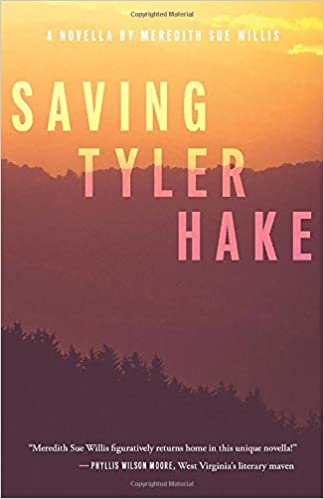
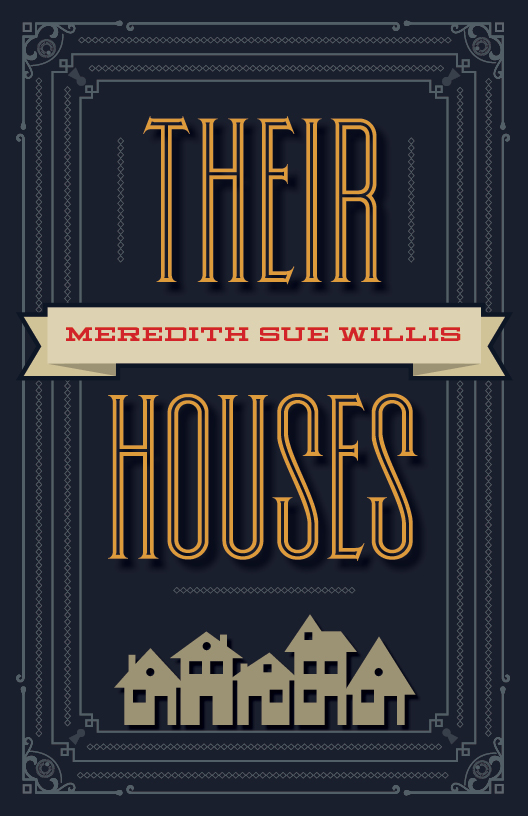
Books by Meredith Sue Willis Samples of MSW's Writing Online News About MSW Biography
Newsletter for Readers and Writers Appearances, Publications, and Projects Online Classs with MSW
Services MSW Provides Resources for Writers Writing Exercises Journal of Practical Writing
[Housekeeping for Prose Narrative January 2025] For a lot more links, go here.
Contact
Today is
Writing Exercises
Current Writing Exercise
I am a veteran teacher of writing from university level to little kids. I offer these exercises for fiction writing and other kinds of prose narrative as part of a community of sharing and exchange.
I call them writng "exercises" rather than writing "prompts" or "lessons" because I think of them as ways to strengthen the writing muscles that you already have and as ways to expand your range of techniques.
For more about my books and my free newsletter about reading and writing, click here, or fill out this form.
Current Exercise
An Overview Exercise: Skim over the project you are working on: a story, an essay, a bit of memoir or even a novel. What do you consider the weakest point in the story? Write down a phrase identifying the weak point. Then do a ten minute directed free write (wherever your mind takes you for ten minutes) to see where it might go.
More writing exercises below and in archives. How about a few notes on grammar and word usage?
More Writing Exercises:
Exercises 1- 20
Exercises 21- 40
Exercises 41 - 60
Exercises 61-80
Exercises 81-100
Exercises 101 - 120
Exercises 121 - 140
Exercises 141 - 160
Exercises 161 - 180
Exercises 181 - 200
Exercises 201 - 240
Exercises 241 - 260
Exercises 261 - 300
Exercises 301 - 330
Tips & More Ideas for Writers
A Journal of Practical Writing: Tips from Writers
(from Susan Lindsey's Savvy Communication LLC)
"When I first moved to Kentucky from the West Coast, I was startled to hear a man say he was wearing a toboggan. I grew up calling the kind of hat he wore a stocking cap. I thought of a toboggan as a sled (which made for an interesting mental image). I was equally baffled by "Do what?" when it was used to mean "Excuse me, I don't understand." Language differs from region to region. Which words do you use? Sofa, couch, davenport, settee Pop, soda, soda pop, Coke Hero, sub, hoagie, grinder, po'boy Bathroom, restroom, toilet, WC, facility Tennis shoes, sneakers, trainers, running shoes
"Savvy writers can put such regional differences in language to good use. Rather than try to use dialect (which can be hard to write, hard to read, and possibly offensive), use word choice, contractions, slang, and regionalisms to show where your characters are from, level of education, place in social hierarchy, and more."
A Journal of Practical Writing: Tips from Writers
More Writing Tips
Some Hints on Structuring a Murder Mystery Novel
Point-of-View Characters Whose Gender Is Not Yours
A Late Novel Revising Technique
Go Directly to Current Exercise
Word Usage, Grammar, and Some Pet Peeves
Three Good Places to Learn About Grammar: The Grammarist;
Grammar Girl;The Center for Writing Studies
Article from Writers Digest on Underlining Titles Versus Quotation Marks
Hints for Structuring a Murder Mystery Novel
These Hints from various sources, but especial thanks to Susan Spann on Chuck Wendig's blog Terrible Minds.
These don't seem to be to be unbreakable rules so much as a sensible baseline for your creativity:
Avoid a lot of backstory
Have a death by page 50 (First big scene--discovery of the corpse!)
You need several suspects: at least three, maybe four. Consider who might want the victim dead, who had the opportunity/means to kill. Be realistic, but have at least one who isn't obvious.
The suspects aren't all necessarily telling the truth, but only one is the killer.
Clues: Include (1) Real clues that help the sleuth solve the crime; (2) red herrings or fake clues that point to someone other than the real killer; (3) Most Important clues, the ones that give the important information for solving the crime.
Plot points: Sleuth identifies killer about halfway through (and story moves on to proving how and why). But the sleuth turns out to have been wrong at least once. Sleuth has serious problems, falls in a hole. Finally gets back on track.
Second big scene: the killer is identified: the sleuth explains motive, what happened, ties up clues as well as exposes killer's identity.
A lot of readers like to figure it out just before sleuth does.
Point-of-View Characters Whose Gender Is Not Yours
We had a discussion in my Advanced Novel Writing Class at NYU about the difficulty of capturing a character who is of a different gender from yourself. Writing about people unlike yourself– by race, ethnic group, age, and certainly gender or sexual preference– is always a big challenge, but also of great interest to a creative writer.
One class member spoke of an excellent contemporary novel written by a woman and narrated by a man. The class member said he admired the book but that it was only about 98% believable as a male narrator. That is, of course, pretty darn good. He said that it was hard to put his finger on exactly where the 2% resided, but thought it might be in certain words or phrases that weren't quite– manly enough? Something didn't quite ring true.
Another class member asserted that a male writer who gets it right with male and female point of view characters is George R.R. Martin, the fantasy epic writer whose vast A Song of Ice and Fire series is presently being dramatized on HBO as Game of Thrones. I am an admirer of Martin's work, and indeed I was impressed and inspired by his enormous cast of point of view characters, male and female. Martin does not, however, use first person narratives, but rather close third persons. He also works in relatively short chapters, always moving to a new character.
There are a couple of great advantages here, including that in third person, you don't have to attempt to capture every nuance of the character's thought and experience. I was inspired to use something like Martin's technique in the novel I'm just now finishing. I have six point of view characters, three male and three female. Like Martin's, these are close third persons, and the chapters vary in length but are short enough that I can focus on one moment in time, or only certain memories of each character.
That is to say, I may skip (if I choose) quintessentially male things like a boy's sexual awakenings or being kicked in the genitals or shaving your face– all kinds of activities that I might or might not be able to imagine or do research on. The focus in my novel, as I see it, is not on the entire consciousness and life experience of any one character, but on certain events and on the interplay of the six people and others. Whether my three men are believable men remains to be seen, of course.
I do have a reasonably successful experience writing first person male, and that is two children's novels in the voice of a boy named Marco, The Secret Super Powers of Marco and Marco's Monster. The reason I was comfortable with this is, I believe, first that Marco is prepubescent; second, that I relied heavily on writing and storytelling by children I had worked with in New York City public schools. Third, my own son was just about Marco's age. And finally, again, my interest was on story, on a certain voice I knew. Marco is not an angst-ridden teen-age outsider but a third grader who is telling his adventures to readers in a quasi-formal tone: "When I was about three years old," he begins, "I had a little red cape I wore every day. My mother says I was so cute, she used to keep a picture of me in the album in this cape with my arms stretched out like Superman...."
These notes are just musing about this issue of how to get deep into people unlike you. My advice is to experiment: Try writing a passage about a character very different from you in his or her own voice. You may not keep what you've written in its original form, but you are highly likely to learn something.
A Late Revision Technique
I've been revising a novel that's going to be published early in 2014 by Foreverland Press as an e-book (hard copy to follow). This book is really finished, and was given an excellent editing a while back by my then-agent. Still, this was an opportunity to go over it one more time, and I tried a technique I've advocated but never actually used myself. This revision technique is only for the end stages of writing a big project. The idea is not to get caught up in the momentum of your own story. Simply put, you go over the final chapter, then go over the penultimate chapter, then the one before that. I did Chapter 29, then Chapter 28, then Chapter 27, and so on all the way back to the beginning. When you do this, you tend to be annoyed by anything extraneous– you're less likely to skip over things. I'm a big fan of moving forward fast as you draft, but now I wanted to do the exact opposite: to slow down and find as much as possible of what was wordy or unnecessary. I didn't find a huge amount to cut and correct, but plenty to make me glad I'd done it. One interesting thing I noticed was that the end of the novel seemed richer and stronger than the beginning, which I had, in fact, polished a lot more. This suggests to me that my novel got better with the accumulation of what had gone before. It's a good layer of revision. For more layers of revision, see my article in The Writer.
Here's something especially for teachers-- a free writing prompt of the month: Prompts
Looking for Poetry Writing Exercises? Writenet at Teachers & Writers has some good ones originally planned for young people, but they would make great starters for anyone
For writing exercises for children, click here. Teens can use the ones on this page, or look at my page for teens.
Here's a link to a really interesting haiku exercise from Timothy Russell.
And then there is making fun of writing prompts:McSweeney's has a fairly funny take-off called "Thirteen Writing Prompts" by Dan Wienceck
Rita Marie Keller has a blog called Buried Treasures that is full of writing prompts and links to more writing prompts. " Essays and writing exercises to help you uncover the great writing ideas you already have."
Exercise # 331
In a poem, William Carlos Williams once listed some ordinary things, then wrote:
These things
Astonish me beyond wordsWrite a scene in your novel, or start a poem or a story with something astonishing beyond words. Perhaps it is something your character observes, or merely the naming of an amazing natural phenomenon.
(See the whole poem at Pastoral by William Carlos Williams)
Exercise # 332
Think of two people you have seen recently at the supermarket or in the park or on the street. Or, if you are working o a story or novel, take two of your characters, just not the main characters.
Imagine these people engaged in a conversation on some quotidian subject: the weather, the baseball scores, whatever. Write down only the words they say. Do it rapidly.
Then go back and add everything else: a setting, gestures, how they said things, tones, thoughts, descriptions of their clothes, etc.
Finally, make it longer. Where does it go?
Here are several list prompts that, according to developer Rose Blessing, are especially useful in stimulating poetry.
Exercise # 333
.
8-MINUTE LIST PROMPTS:
--Things you've copied
--Items that beep
--Poets' problems
--Things at a train station
--Things to leave alone
--Favorite tools
--Reasons to buy flowers
--Childhood treasures
--Things out of reach
--Ways to enjoy the outdoorsSelected prompts used in 2015 and 2016 at The Write Group's Saturday morning Free Write sessions at Montclair Public Library in Montclair, New Jersey.
Shared by Rose Blessing, Write Group memberTo learn more about The Write Group, visit their Facebook page or website.
Exercise # 334
More prompts from the from The Write Group's Saturday morning Free Write sessions at Montclair Public Library in Montclair, New Jersey. There were shared by Rose Blessing. To learn more about The Write Group, visit their Facebook page or website.
15-MINUTE PROSE PROMPTS
--Two steps forward, one step back
--Focus was everything.
--The fifth child startled us.
--Don't underestimate me.
--My regular wardrobe is . . .
--He had begun living in his imagination.
--I am an adult.
--It tasted like blue.
--I'm done with the doctor.
--Things can be replaced. People can't.
-- In this moment, on this planet, in this galaxy
--They hadn't a clue.
--BRB (be right back)
--Focus is everything.
--The dog's true personality revealed itself in the dog park.
--I still care, despite it all.
--Winter weather advisory
--That in-between place
--Now that he's dead...
--Loose and light
--A little respect, please
--Thus much I know
--Sound byte
--The monsters screamed.
--I long to be absolutist.
--Copy the boss.
--Facing the mob
--I'm in a dream.
--Yesterday's news
--You're the star.
--It will happen shortly.
--Notes of peach
--I know the place well.
Exercise # 335
What do you fear? Think of a few things, realistic or unlikely-- Developing a medical condition a close relative has or had? Mosquitoes? Black holes in space?
First write briefly about the thing that frightens you-- when it frightens you, how it frightens you, and where you think the fear comes from.
Second, try a reversal: write an ode to the thing you fear: "To a Black Hole in Space," etc.
Finally, try a short story that begins with a character with a very different fear from yours: "Marshan had always been deathly afraid of vultures, even seen from a great distance floating on columns of air..."
Exercise # 336
It's really really hot this week. Imagine yourself or some random person you have seen in a public place or a character in something you've written getting hotter and hotter.
What does it feel like? What is the evidence of heat? Sweat is obvious, feet swelling against sandals is a little less obvious. What else?
What are the circumstances? A stopped subway car and the AC goes off? A sports event out-of-doors?
You can do this as simple description, or imagine it driving the person to take action: something creative to cool off? Something violent out of misery?
Exercise # 337
I was just reminded by a grown woman of a writing exercise I once gave her class when she was in fifth grade. It is exactly the kind of assignment I always hated most--the sort of fake "Let's get wild and imagine something crazy!"
My assignment was, "Imagine you are a roll of Tums."
Embarrassing, yes?
Try this challenge: take that roll of Tums and put it into a bit of memoir writing or a poem or a story. Or try using it to start something.
Help redeem this writing teacher!
Exercise # 338
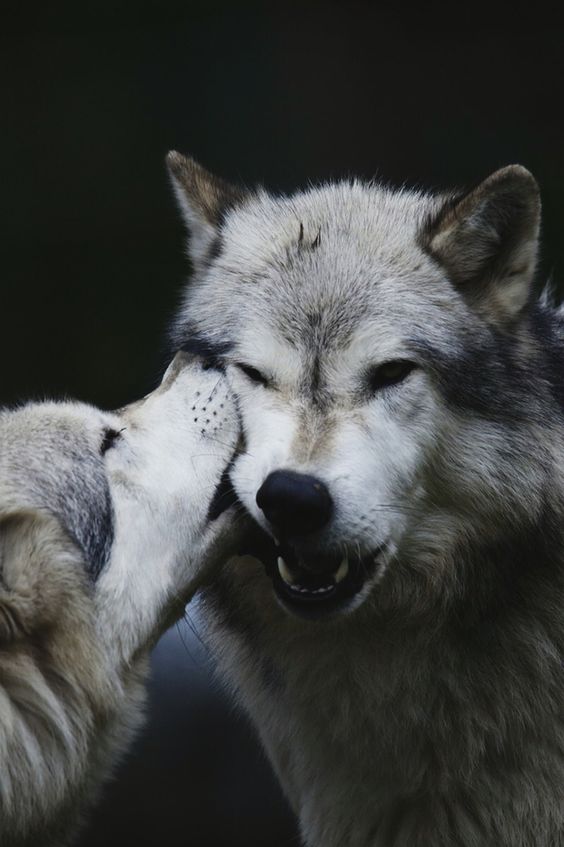
Write something with a wolf in it. Maybe it is actually about a wolf, or maybe a wolf appears in a dream or when characters visit a zoo. This can be especially useful as a jumpstart on a blocked project. Have your main character see, or imagine, or hear, or remember a wolf or something about a wolf.
Exercise # 339
It's National Novel Writing Month--a free project that gives people support in writing all through November, trying to draft, or at least get a lot of words written on, a novel. Learn about it here.
Try it out, if it appeals to you.
Or, try this: Write the opening lines of three novels you always wanted to write.
Read over them, and pick one.
Write on!
Exercise # 340
Write either a fictional beginning or a piece of memoir about a historical or current event of deep darkness, unease, and danger.
Writing about something from the past may help give perspective on current fears and dangers. Imagine you or a character are in Europe in 1939. Write something set in times when many Americans were enslaved.
Exercise # 341
Write about something stolen--a theft. This can be metaphorical ("I remember the moment when my heart was stolen...") or something small (a child takes an unauthorized cookie) or a major crime. Use it to start a piece or or slip the theft into an ongoing project.
Holidays have so much importance in our cultural and personal lives that they often include disappointment and bad feelings.
Write about a contrast: a holiday when nothing is going right--but somehow, the feeling comes through. Or, vice versa, a holiday with high expectations and a crash. Loneliness in the midst of a crowd of family? Not getting the gift we wanted--but getting something much, much better?
Exercise # 343
Here is the name of a new anthology of stories that I really like (I have a story in it). Use it as a prompt for a piece of writing: Eyes Glowing at the Edge of the Woods. Try it as the title of a poem, or turn it into an opening sentence ("There were eyes glowing at the edge of the woods...") Or don't use the phrase at all, just contemplate it and see where it takes you.
Exercise # 344
Take a piece of writing you have laid aside but find youself still interested in, and try this simple series of exericises:
1.Write what happened “One month later….”
2.Write what happened “One year later….”
3.Write what happened “Ten years later….
Exercise # 345
Think of, and describe, a real mirror you have seen or owned or lived with. After describing it, write what it has reflected. Here is a poem-version of this exercise by Gail Mazur.
Exercise # 346
30 Writing Prompts for National
Poetry Month!Try one a day and see what you end up with! Some of these have a game-like quality, but don't be put off: playfulness is a good thing.
Exercise # 347
Write about yourself (memoir) or your character (fiction) three times. Choose three moments widely separated in time in your or your character's life. Try to include description, dialogue, and inner consciousness to capture three versions of the person. Look for differences: hair color? body conformation? who the person loves? what is capturing the person's attention at this period in her or his life? Don't do a summary or character sketch: be concrete.
Exercise # 348
Boring Bowls: A Challenge.
Write something interesting (or funny or painful or true or surreal) that begins with three boring blue Melmac bowls. If you are working on a novel, put them in your novel and see where they take you.
Sometimes the best way to get ideas is to begin by describing the object.
Exercise # 349
Write brief summaries of 3 important relationships in your life: make them all of one type (3 love relationships; 3 opponents in a sport; 3 people who betrayed you; 3 teachers). Make them as long or as short as you want, but concentrate on how they are different--and alike.
Exercise # 350
They always say, "Write about something you know."
Pick some mundane task (or something from your day job) that you are particularly good at, but that isn't part of your writing life.
Maybe it's putting up hooks on plasterboard. Maybe it's making rice or mixing a perfect martini. It might be a technique you use in teaching to get shy students to participate. Or a way you use that always brings people closer to making a deal.
Be sure it's something that isn't an official "art."
Write a "how to" for the thing as clearly and precisely as you can. Give instructions. Even number them.
Then when you've written it, write a scene for a novel or draft a short story that centers on this technique or skill or activity.
Exercise # 351
.
These are the final lines of a famous novel. Do you recognize them? They are, finally, about the value of art to the artist, to the universe, without respect to fame and fortune.
Quickly, as if she were recalled by something over there, she turned to her canvas. There it was–her picture. Yes, with all its greens and blue, its lines running up and across, its attempt at something. It would be hung in the attics, she thought; it would be destroyed. But what did that matter? She asked herself, taking up her brush again. She looked at the steps; they were empty; she looked at her canvas; it was blurred. With a sudden intensity, as if she saw it clear for a second, she drew a line there, in the centre. It was done; it was finished. Yes, she thought, laying down her brush in extreme fatigue, I have had my vision.
Click here to see what novel, and then write your own manifesto about why you write.
After you have written about why you write, write a passage about another artist: a painter, a folk artist, dancer, a singer. It can be an imaginative recreation of the mind of a famous person, or a created character. Have this person having an insight about their own work.
Where might this lead?
I did a story like this called "Family Knots" about an invented quilter around the turn of th twentieth century.
Exercise # 352
"Writing should always be exploratory. There shouldn't be the assumption that you know ahead of time what you want to express. When you enter into the dance with language, you'll begin to find that there's something before, or behind, or more absolute than the thing you thought you wanted to express. And as you work, other kinds of meaning emerge than what you might have expected."
(Click here to see who wrote this, and for a link to the whole article.)
Do you agree or disagree? And how do you agree or disagree?
I love the idea of a "dance with language," although I don't believe it's the only source of writing, not even of poetry.
Find a phrase in a poem that you particularly love the sound of: "When she moved, she moved more ways than one" or "I must go down to the sea again" or "When lilacs last in dooryard bloomed" or "Mary Mary quite contrary..."
Find one of your own (or feel free to use one of those). Copy it out, and then use it as a prompt for a piece of your own.
Exercise # 353
Turn to some writing project you are engaged in: a memoir, a novel, a short story, a poem. Put a theft in it.
The theft could be an actual burglary, or a figurative theft ("Once again she stole my heart...") of a dream of a theft or a memory of one. Can you remember a time in your own life when you stole something? Did anyone every find out?
Exercise # 354
Write a passage about sexual desire, or an act of sex, using the senses of hearing, touch, smell-- but not the sense of sight.
Exercise # 355
Around the New Year, everyone is thinking about making resolutions. Write a story, anecdote, essay, memoir or poem that begins with someone making a New Year's Resolution, or, alternatively, with a list of resolutions (humor is welcome!)
Exercise # 356
In the Evening
Fenton JohnsonI
In the evening, love returns,
Like a wand’rer ’cross the sea;
In the evening, love returns
With a violet for me;
In the evening, life’s a song,
And the fields are full of green;
All the stars are golden crowns,
And the eye of God is keen.
II
In the evening, sorrow dies
With the setting of the sun;
In the evening, joy begins,
When the course of mirth is done;
In the evening, kisses sweet
Droop upon the passion vine;
In the evening comes your voice:
“I am yours, and you are mine.”
This poem is very old fashioned. it came out in a book published all the way back in 1913. It gave me an idea for an exercise, though.
What is your favorite time of day?
Write about it, either as a poem, perhaps imitating Fenton Johnson's poem, or in prose.
Or, alternatively, write about evening. Do you feel the way Fenton Johnson does about evening? Maybe the opposite?
Parodies can be fun too!
For more about Fenton Johnson, click here.
Exercise # 357
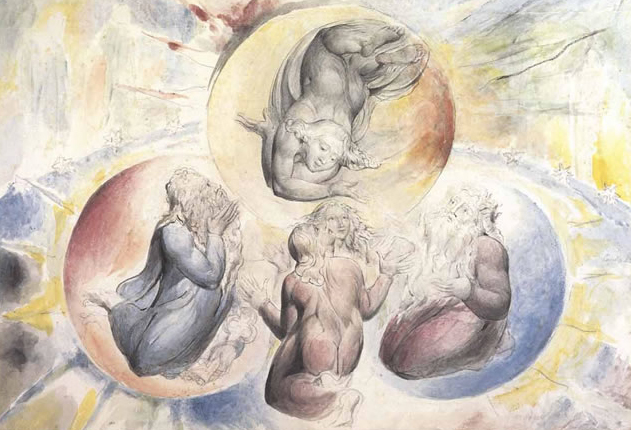
William Blake, poet and visual artist, had an extremely idiosyncratic view of the world--and the afterworld. This painting was called "Heaven." Write a description of your "Heaven" as a poem, paragraph, or story.
Exercise # 358
A character in your story is putting on an article of clothing. This could be told directly, or, better, observed by someone else (watching a lover sensuously getting dressed). It might also be the character's own feelings about struggling into a too-tight sweater, or perhaps strapping on equipment for some sport or other contest.
The objective is to make this as sharp and clear to the reader as possible.
Exercise # 359
Draft quickly a short real life incident from your past. Don't try to "write" it, just record the outlines of what happened.
Then go back and choose one element of the incident: the place where it happened, the dialogue, the appearance and/or character of one of the participants. Write that slowly, using a lot of sense detail.
Then write again, making the jump to fiction--changing the ending or some other element to explore other aspects of the story-- what if I had said or done something different? What if I told it from the point of view of the other person?
Write this last version slowly and see where it takes you.
Exercise # 360
Something has just happened that you've been wanting or looking forward to for a long time. Write about the moment when it comes to reality--and what happens afterward.
Exercise # 361
You (or a character in your book) are six months in the future. Something you or the character always wanted has come to pass. This might be a work-related succes or something in a relationship or personal accomplishment. Write about the event.
The opposite exercise is interesting too: you or your character six months in the future and some terrible thing has happened. It might be a climate or political disaster or a great disappointment in a relationship or at work. Write the story.
Exercise # 362
An elevator door opens. A character steps out, and the next thing that happens is.... (Or, alternatively, the character sees.....)
(A good way to start this would be by describing the elevator's interior, if you are following the character's point of view, or the elevator's exterior--the doors-- from the outside if the character exiting is going to be the surprise.)
Exercise # 363
Put some religion in your novel–or start a short piece, fiction or nonfiction with something about religion. Take this as broadly as possible: the religion could be a character (or oneself in memoir or personal narrative) seriously contemplating belief, or it could simply be someone passing a house of worship or a Mitzvah tank at Times Square.
Maybe there is something in the news, or a piece of history you could use. Have religion appear in narration or a monologue--or in dialogue. It's a constant part of our lives-use it in your writing too.
Exercise # 364
The Serpent in the Mist; The Corpse in the Fog;
The Children of the Exiled; Phantoms Of The Solstice; Butchers and Snakes ....Just a few of the tens of thousands of possible randomly generated titles you can find at sites like Reedsy and Fantasy Name Generator. Take them for a spin, relax with a giggle, then pick your favorite, either as is or revised, and use it as a writing prompt:
The Serpent of the Mist
They waited on the beach until the wee hours, huddling together, their scraps of blanket wrapped around their shoulders, the babies sleeping, the strongest straining their eyes to see it.
They heard it before they saw it, though--the distant clanking of the anchor chain, the flapping of the sails, the plashing of the oars as at last the dinghy approached on the incoming tide.
They couldn't see her, but they knew The Serpent of the Mist was waiting to take them away...
Exercise # 365
Take a project you are eager to start or restart (story, essay, chapter or a whole book). On a sheet of paper, oversized if possible, write in the middle of the space the thing that originally caught your attention and gave you the idea for this piece of writing.
This is an exercise, so don't look back at what you've already written. Write the first thing that comes to mind. Keep it concrete. Thus, "The shoe with the double sized sole for someone with one leg shorter than the other that I found on the side of the road" rather than "The great American novel of the twenty-first century."
Now write around it, in the rough positions of an analog clock's numbers, various other objects, people, jokes, incidents, that came to you from the central thing. Maybe they are already part of your draft, maybe they are ideas you haven't written yet. Maybe they come to you right now as you do this exercise. Do as many or as few as you want.
Now do an outer ring of more ideas, perhaps remembered from the draft, perhaps stimulated by the ones you just wrote.
Then turn to your blank notebook or computer screen and, without looking back at the sketch or at any previous drafts, start to write.
Exercise # 366
We did this exercise in my spring Novel Writing class at NYU. It's one of what I call "quotidian" exercises-- when you put a thing in your story (or use the thing as a prompt for something new)that is ordinary, everyday, could be in any story or real life. In this case...
Write in meat or a meat dish.
This could simply be a description of food, or it could be the stimulaus for a scene in which a vegetarian is presented with a dilemma--or an argument. It could be a duck hanging in a shop window in Chinatown or an image of meat. It could be a meal or a dream or something seen in a magazine or online. Just make it meat.
Exercise # 367
Write a poem in the form of instructions. Here's a lovely one by Dante Di Stefano about his early years of teaching: "Prompts (For High School Teachers Who Write Poetry)"
Exercise # 368
"The Silver Screen" exerciseThink of a moment when the main character in your prose narrative is involved in physical action.
– Close your eyes and see a movie screen in front and above you. Write the action as clearly as possible, watching it on the movie screen as if it had been filmed for you.
– Now write it again without the movie screen. What is going on inside the character/characters? What are the sensations, the thoughts?
Does one of these work better for your purposes than the other? Do you like one better than the other? Are they the same? Is there a way to use both?
Exercise # 369
Quotidian DialoguesTry writing one or two of the following "quotidian dialogues." This is especially good for jumpstarting a stalled longer project, novel, novella, or memoir.
They are the sort of thing that could appear in almost any realistic story (or for that matter fantasy or science fiction novel).
Many of our most important dramatic moments happen at ordinary times:
Someone is trying to sell something to another person.
A kiss. This could be passionate or respectful (The Godfather!) or anything else.
Two people are talking, and there is a subtext– something is going on under the surface.
Or, two characters are talking about some ordinary object– a bottle of wine, a painting on the museum wall– but they are really talking about something entirely different.
People are sharing a meal and a conflict arises. This could be small and humorous or a major break..
An adult is making a child suffer (can be verbal or inadvertent as a doctor gives a shot to a reluctant toddler)
Someone is subtly in a conversation showing their power over another.
Exercise # 370
This is s a variation on Exercise # 342 above:
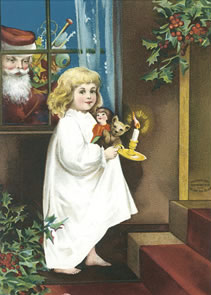
Holidays have so much importance in our cultural and personal lives that they often include disappointment and bad feelings. Look at these images of some major winter holidays, and write about one, going in any direction that comes to you:
Exercise # 371
Two people are planning an event: maybe it's a mother and daughter planning the daughter's wedding, or two people talking about a party that one person doesn't really want. Maybe there two people are responsible for an event at work, and while they pretend everything is great, they are really engaged in a big struggle.
Write the scene--dialogue, gestures, setting-- and show without telling the tensions and disagreements if there are any.
This could have a happy ending or end with a fight, or maybe someone fighting is a happy ending.
You might do this as memoir (something that really happened to you) or you might put it in a novel or other fiction you're writing (a way to get restarted on a stalled project).
Exercise # 372
Love in a time of....Coronavirus! Two people meet in a supermarket, six feet apart, and what happens?
Exercise # 373
Put a headcovering in your story or novel or memoir (hat, baseball cap, hijab, battle helmet, headscarf, floppy brim beach hat). Focus on what the head covering looks like: its texture, temperature, even its odor? Does it bring up a memory? Is it part of the plot? Does it change what happens next?
Exercise # 374
Someone in your story gives someone else a gift. This could be the protagonist to a friend or lover or loved one; it could be a dangerous gift; a gift that confuses or causes conflict; it could be an unwanted gift the receiver does not want. Anything that works for your novel. A good way of proceeding is to describe the thing first (if it is material), using the physical details to stimulate your imaginatiion for what happens next. Does it remind the character of another gift or another person? What does the gift cause to happen in the story?
Exercise # 375
Write a conflict scene. This is the heart of fiction. It can be something subtle and quiet between two people, or it can be a battle scene!
Exercise # 376
Exclusive!
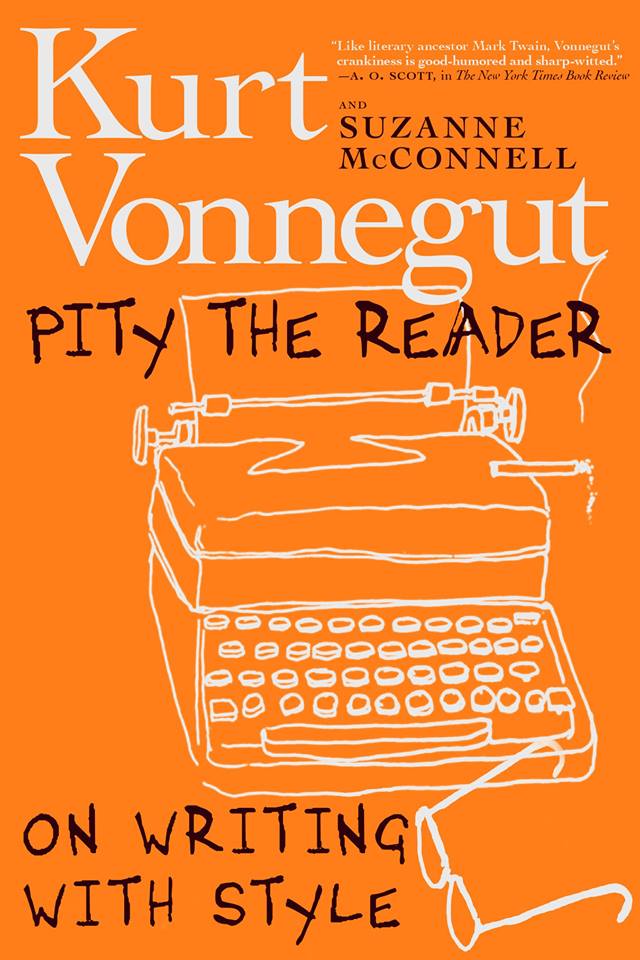
An exercise from Pity the Reader!
You get to try it first here: an exercise from Suzanne McConnell's new edition of her book about ideas from Kurt Vonnegut. The book has just come out in paperback, and the new edition has a special section at the back called "Practices."
This is derived from the chapter in Pity the Reader about the sound of language, "Chapter 27: Prose, the Audial" pp. 233-248.
On p. 241 I wrote "Throughout his work, Vonnegut conjured and indicated words.” Then I used this example from God Bless You, Mr. Rosewater:
"[Dr. Ed Brown] coined a new word for Sylvia’s disease, “Samaritrophia,” which he said meant, 'hysterical indifference to the troubles of those less fortunate than oneself.’"
Here is the ‘practice':
1. As with Vonnegut’s “Samaritrophia,” invent a noun and definition for a phenomenon which has, as yet, no defining word. Make its sound echo its sense. Employ it in a sentence.
You can buy the book from your local brick-and-mortar bookstore, from https://www.napabookmine.com, at Bookshop.com, or from the usual online suspects.
Exercise # 377
Take a story or novel section with a character who you don't feel you've thoroughly captured yet. It can be a major or minor character.
Go through with your search-and-replace word processing function, and change the character's name.
Now do it again, trying to find a name that feels right for the personality but also is appropriate for the historical time and possibly the ethnic background (although a name that defies expected backgrounds can work too).
This process can help you focus on who the character really is.
I began with my main character's daughter being named Eleanor after her grandmother, but as the girl got older in my novel, especially as she reached adolescence, she seemed very spiritual and self-sacrificing. Clara felt right, so I changed the name to Clara.
But the more scenes she appeared in, the more she took shape, the more she became determinded or even stubborn rather than spiritual (and thus more useful to the world, probably). So I renamed her Julia. At the moment, she's Julia Eleanor Rosedale.
Exercise # 378
Write a family conflict. If you are looking for a story starter or a memoir idea, go back to your childhood and start with something you didn't understand then, but now you do, or think you do.
This exercise encourages new angles and insights rather than the hot passion that colors something more recent.
If you're working on a novel, put a family conflict in the novel: this can be in a flashback or you can try it as a new plot element. It can also be a simple bit of backstory on a character, perhaps told in dialogue.
Family conflict is perhaps the original best source of stories: Jacob and Esau! Elizabeth I and Mary Queen of Scots!
The ultimate fiction writing prompt: What if... What if instead of turning down that boy, I had gone out with him? What if, instead of being born a girl baby in the mountains of America, I had been born in misery and slavery on a ship of the Middle Passage? What if I had been of a different gender? A different species? What if?
Exercise # 380
Green.
1. Put something green in your novel. Where does it take you?
2. Start a personal essay, memoir piece, or short story with, "I remember the green......" His eyes? the April hills? the mold on the sandwich bread?
Exercise # 381
An important moment for a character in your fiction: Have the character feel it in the body. Perhaps the person has been hurt or sick and is just coming to consciousness, sensing all the body parts, what's not broken, what aches.
Or has felt a strong emotion expressed in physical characteristics, not just "I felt sick to my stomach," but "My stomach clenched and rolled and the fried onion rings were trying to rise up my throat..."
Or, the first time the character runs a mile or reaches some athletic milestone: heart-thumping, head light, sweat pouring, but euphoric.
Make it very detailed, over-writing, to be cut later– meanwhile going where it takes you next.
Exercise # 382
Write about a person running.
Begin with a detailed description of the action: if seen from a distance, be precise, or use imagery, or both.
If it is you or a first person character running, try to get the sense of what if feels like to run: pounding feet, burning lungs of the welcome flow of air in the lungs.
After you've described it, make the context clear. Why running? It might be exercise or fleeing danger or trying to make a plane or playing with a pet.
Exercise # 383
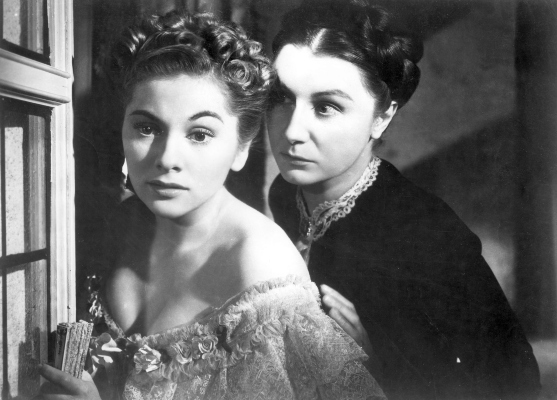
Begin by describing this clip from an old movie:
Then write what happens next! Feel free to continue the scene from the movie, or to use it in some other way--two people are discussing the scene, etc.
After you've written, see below for what movie it is.
Exercise # 384
If you are expanding or restarting a novel or other prose narrative-- or if you are looking for material to start fiction or memoir-- try a directed free write
(A directed free write, by the way, is writing for a set period of time, usually five to fifteen minutes, just putting down whatever comes to mind, but starting with the given object, situation or idea). The point here is to stimulate something you might not have known you had to get restarted or started. So--put a flashlight in your project and see where it leads. If you are writing, say, sword and sorcery, let it be a fiery torch. Or maybe your characters are having a night out at a Tiki Lounge. Call it a flambeau if you'd rather. For memoir, think of how you used to read under the covers at night by flashlight. In a thriller, have a flashlight run out of batteries at a crucial moment. The point of this is to use a "torch" in any way possible to get yourself started or restarted. See where it takes you.about a torch. This, of course, is British for flashlight, but you may also write about a flashlight, or a medieval torch or anything else that catches your attention..
To the Lighthouse by Virginia Woolf
Marilynne Robinson, "Toward Essentials," The New York Times Book Review, September 24, 2017: p. 13.
A scene from The Killers, a movie based on an Ernest Hemingway short story of th same name.
All MSW's Books
Buy via Bookshop.org--the online bookstore that splits proceeds with brick-and-mortar stores!
Novels and Short Stories for Adults
Books for Teens and Children
Books about Writing
E-book Versions of MSW books
(To buy any of these books as e-books, click on the image. They are also available at the
Kindle Store and at the Nook Store as well as the iBook store and other e-book stores.)
Lots of Links:
Articles for Writers
Biography of MSW
Blog
Books by MSW
MSW Classes Online
Adult & kid workshops
Book Reviews by MSW
Center for Writing Studies (grammar & more)
Contact MSW
E-Books by MSW
Fiction Online by MSW
Grammar-Word Study
Grammarist
Grammar GirlInformation about MSW
A Journal of Practical Writing
Kids Page
Literature to Read
and Study (online)Links for Writers and Readers
Manuscript Consultations
Newsletter on
Books and WritingNews
Nonfiction by MSW
Obituaries and More
Online Classes
Order Books
Order Books Online
Point-of-View Characters Who Are Not Your Gender
Publicity
Practical Writing Journal
Resumé
Resources for Writers
Samples of MSW Writng
Structuring a Murder Mystery NovelTeens Page
Tips for Writers
Upcoming MSW events
Videos of MSW
What's On This Site?
Who is MSW?
Workshops with MSW
Writing Exercises
WSM Technical Services
Writing Tips
Appalachian YA Literature
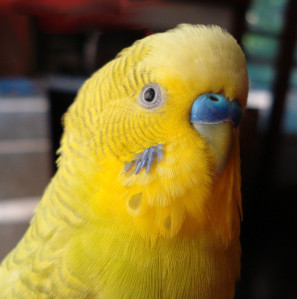
Taxicab Willis-Weinberger Extraoredinary Budgerigar
March 2006-March 30,2020
Irene Weinberger Books.... an imprint of
Hamilton Stone Editions
Check us out!
To receive MSW's free newsletter for readers and writers and notice of online classes and other MSW news, join her mailing list here:
Images and photos found on the various pages of this web site may be used by anyone, but please attribute the source when it is specified.
Meredith Sue Willis Author and Teacher is licensed under aCreative Commons Attribution 4.0 International License.









.jpg)