Good luck with your novels, class!
You were wonderful to work with!
Novel Writing (Part One) Fall 2017
Current Session
updated 12-5-17
List of Presenters and Dates
A note and some book recommendations from Jamie Ma:
I was thinking about the classmates' comments the whole train ride back home last night. This class was the first time I showed my work to people in a workshop environment and receive feedbacks. I find the impact very powerful. After each presentation I am always very inspired and motivated to work more.... I also want to share some passages of books I like. Maybe it will give you some ideas of why I write this way. The reaction in the class helped me to understand that I did not do it well and how I should improve it. I know these are very famous books and you most likely know them better than I do! But here they are:
This is the wonderful opening of my favorite book, The Unbearable Lightness of Being:
The idea of eternal return is a mysterious one, and Nietsche has often perplexed other philosophers with it: to think that everything recurs as we experienced it, and that the recurrence itself recurs ad infinitum! What does this mad myth signify?
(When I first read this, even though it gave me a huge headache, I bought the book immediately.) And this is in the passage 3 in the same book:
I have been thinking about Tomas for many years. But only in the light of these reflections did I see him clearly. I saw him standing at the window of his flat and looking across the courtyard at the opposite walls, not knowing what to do.
And Italo Calvino is another author I find interesting. I've been reading The Invisible City when I write my descriptions. I apologize if you already know him too well:
You are about to begin reading Italo Calvino's new novel, If on a winter's night a traveler. Relax. Concentrate. Dispel every other thought. Let the world around you fade. Best to close the door; the TV is always on in the next room. Tell the others right away, "No, I don't want to watch TV!"...
Like you said, if I really feel things this way I should write it this way. And I guess I really do! What I want to achieve is something like Felini's 8 and a half. A autobiographical piece that doesn't make sense to most audiences, but it's real and beautiful. And what matters is really just how real and beautiful it is.
I guess that's why we write fiction, right? We just can't tell people straight: "I love my father even though he didn't treat me well when I was a child," or "I was not content in a relationship so I left it." I would feel something is lacking if I say it that way, and a part of me that's very precious is given out without my permission.
I need the gild. A mask. A window. A stage... to sit back and observe myself, or talk about it objectively, or calmly, so I would feel nobody will steal what I've been protecting.
Maybe it's also a very Asian thing. Haha. We are less straightforward...
INFORMAL CONFERENCES-- See schedule.
Ishiguro on his writing process: some quotes and links.
Check outNational Novel Writing Month--Some people swear by it...
Click here for the NON-EVALUATIVE GRADE form.
Some Novels Recommended by this Fall 2017 Class
Erin Richards looked up the Chicago Manual's rule on numbers. She says, "From my knowledge, Chicago style is used in most major publishing houses.:
In nontechnical contexts, Chicago advises spelling out whole numbers from zero through one hundred and certain round multiples of those numbers (see 9.4).
Thirty-two children from eleven families were packed into eight vintage Beetles.
Many people think that seventy is too young to retire.
The property is held on a ninety-nine-year lease.
According to a recent appraisal, my house is 103 years old.
The three new parking lots will provide space for 540 more cars.
The population of our village now stands at 5,893From Susan Caplan at NYU:
Dear Writing Students,
We are pleased to announce that NYUSPS again will be hosting a literary reading at KGB Bar in the East Village on Tuesday, December 5th from 7:00 to 9:00pm. This is an opportunity for students enrolled in fall classes to read their work in front of an audience.
Because time is limited and we have so many fantastic writers, students who wish to read at the event must submit a writing sample. Please submit the piece you would plan to read at KGB bar. We ask that submission be no more than 4-5 pages in length. Submissions can be fiction or non-fiction, memoir or genre fiction, prose poems or sonnets, or anything in between—we only ask that you keep submissions to 4-5 pages total. Please send your submission to susan.caplan@nyu.edu no later than Monday, November 6th.
Students chosen to read at the event will be required to attend a meeting during the week of the reading to rehearse and discuss logistics.
If you have any questions, please feel free to get in touch. We look forward to reading your work! All best,
Susan
A Handful of Living Novelists
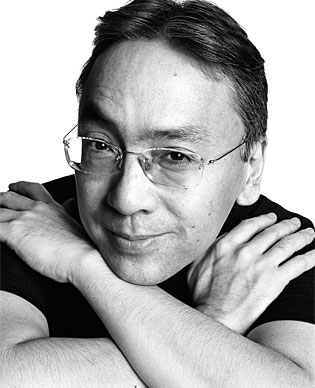
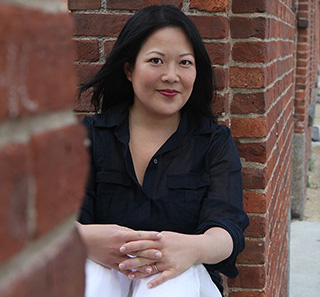
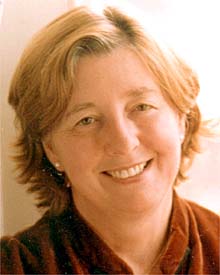
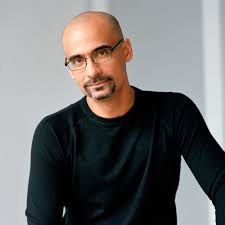
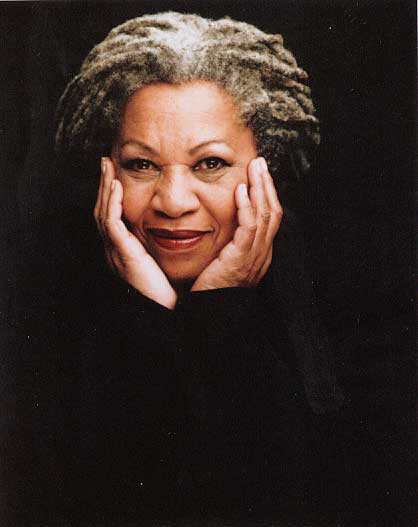
Helen Wan Pat Barker Junot Diaz Toni Morrison
Authors of the so-called Great Tradition in English Literature
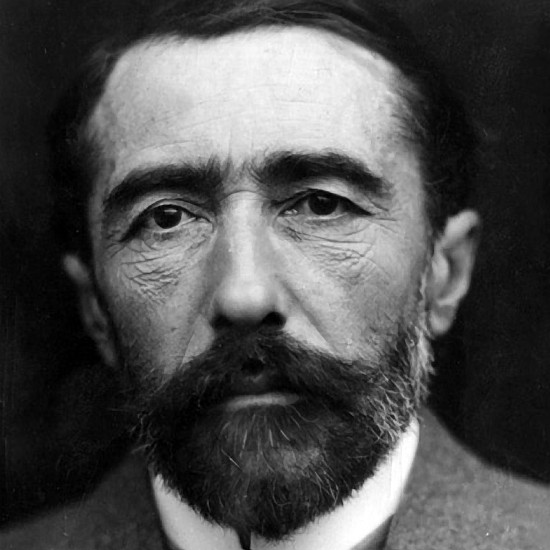
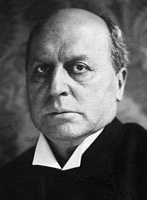
Jane Austen George Eliot Henry James Joseph Conrad
Some Excllent Living Genre Novelists
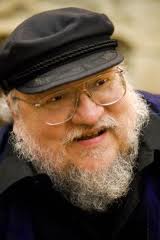
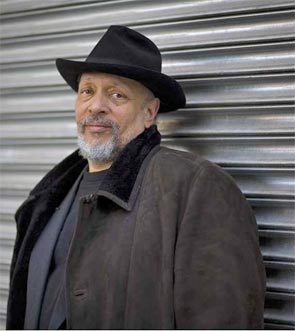
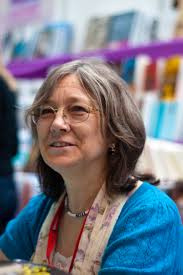
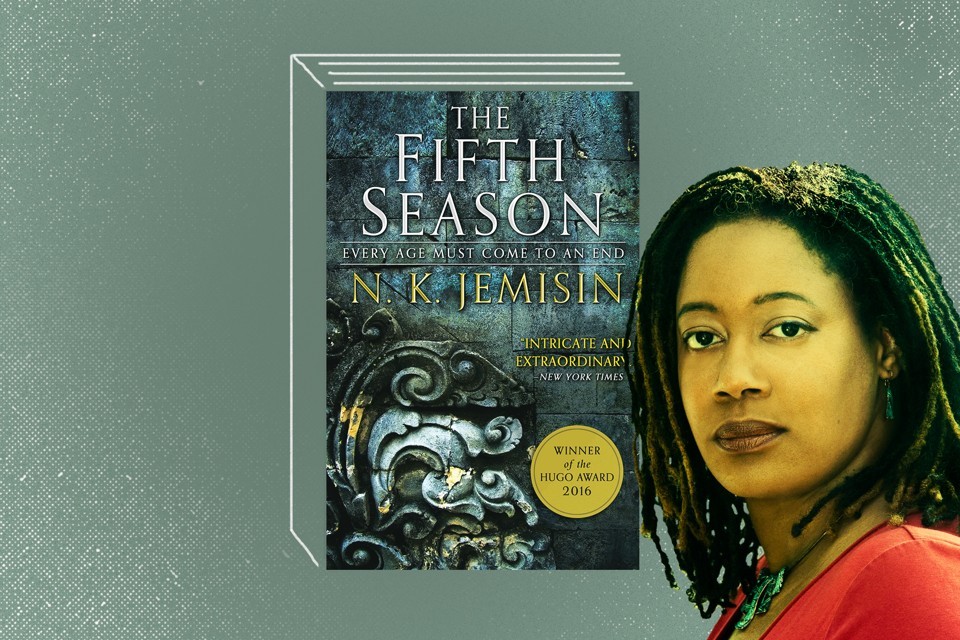
George R.R. Martin (fantasy ) Walter Mosley (crime ) Robin Hobb (fantasy) N.K. Jemison (science fiction)
Some Things to Read (Optional)
My review of Francine Prose's How to Read Like a Writer with a discussion of the elements of prose writing.
Article on fantasy--but most of it is good advice for all kinds of novels.
Blog post to consider
Aan article on the future of the "social" novel
Some resources you might be able to use.
"Writing should always be exploratory. There shouldn't be the assumption that you know ahead of time what you want to express. When you enter into the dance with language, you'll begin to find that there's something before, or behind, or more absolute than the thing you thought you wanted to express. And as you work, other kinds of meaning emerge than what you might have expected. It's like wrestling with the angel: On the one hand you feel the constraints of what can be said, but on the other hand you feel the infinite potential."
– Marilynne Robinson, "Toward Essentials," The New York Times Book Review, September 24, 2017: p. 13.
NYU WRIT1-CE9355
Continuing Education Units (CEU) 2.5
New York University, School of Professional Studies,
Center for Applied Liberal Arts
Monday 6:30 PM - 8:50 PM
9/25/17 - 12/4/17
Manhattan Village Academy Room:229A
43 W. 22nd St., NYC
Receive the help you need to get started and to get structured, whether your goal is to write a novel or to mold a series of short stories into a longer work. In this course, delve into writing exercises that practice establishing tone, exploring character, tightening and deepening dialogue, and adding interior monologue. Topics covered include sustaining interest as a writer and a reader, understanding if you need an agent, and excerpting from a lengthy work for publication in magazines. The course is appropriate for anyone who has done some writing or who has taken an introductory writing course.
Instructor: Meredith Sue Willis
Email: MeredithSueWillis@gmail.com
Meredith Sue Willis home pageFor information about MSW's novels, go to commentary. To read some short fiction online by Meredith Sue Willis, try "Rescue" or "Tara White." For more of her writing online, click here.
Current Week Presenter List NYU Policies etc.
Schedule of Topics and Assignments
Please communicate with the teacher by email at meredithsuewillis@gmail.com. Changes, updates, and links to readings will be found here on this website. Please check it at least weekly. The text for the course will be primarily the assignments and presentation pieces of the other students plus some of these online readings and occasional hard copy hand-outs.
Note to returning students and others with a novel-in-progress: The fall section of this class follows a series of assignments aimed at getting a novel started. For those with a novel already in process, use the assignments-- or substitute passages from your project--to move your book forward in whatever way works for you.
Students are expected to attend all classes, as the course is planned around discussion. Please let the instructor know if you must be absent. Turn in all assignments in hard copy, double-spaced with one inch margins on all sides and a font comparable to Times New Roman 12 point. Homework assignments should be about 2 pages (up to 600 words). Homework assignments go only to the instructor. Presentation pieces go to all members of the workshop.
Most sessions will include in-class writing. Students who attend and complete all of the assignments should finish the course with an outline and twenty five or more pages of a novel.
Check below for various official NYU policiies. It should be noted that all NYU policies on academic integrity (i.e., plagiarism) are fully in effect in this course. See below.
You may request a grade for this course or a Non Evaluative mark. For the Non-Evaluative, please see the attached form. A copy of this request must be filed with the department.
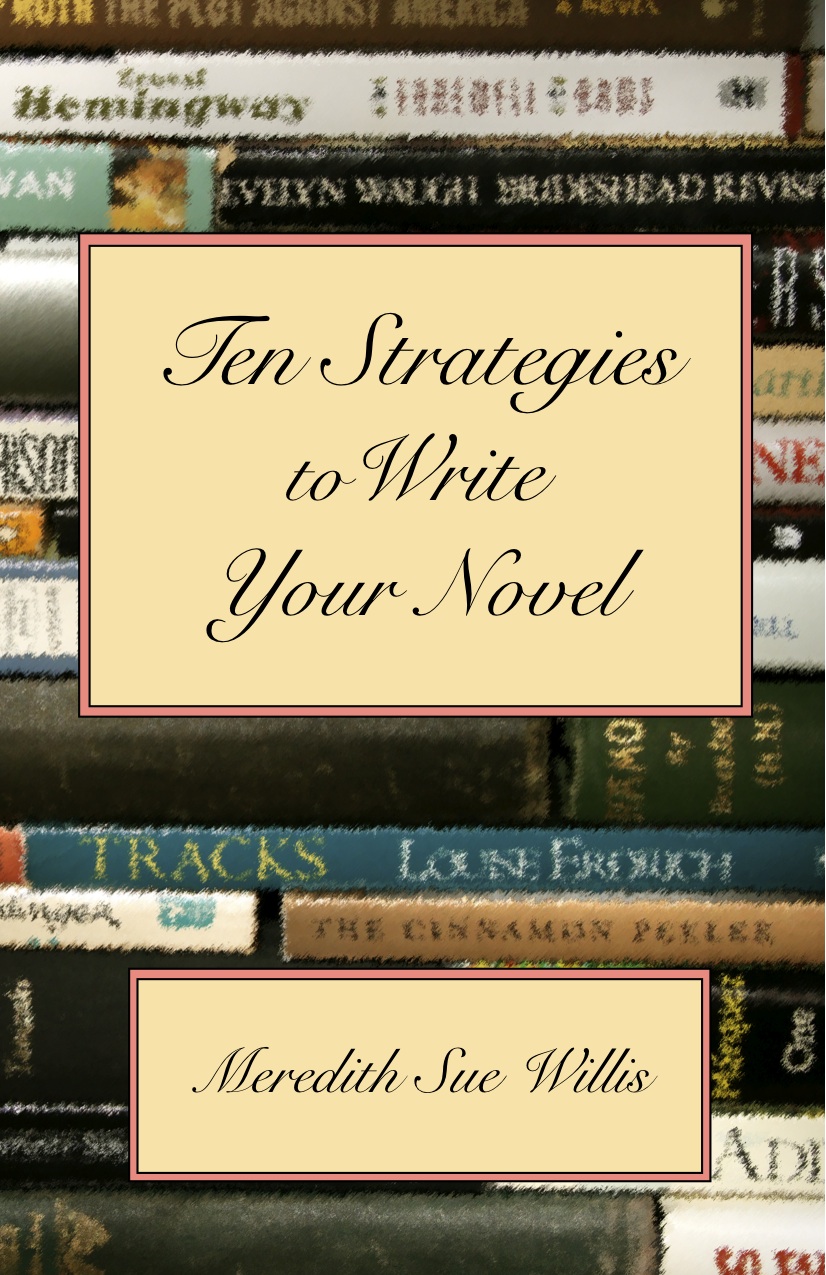
Optional text: Ten Strategies to Write Your Novel
1. 9-25-17 Introduction. In class topics: Process and product; story, plot, and architectonics. What fiction does that movies don't. Fiction as the art of doing many things at once. Centrality of the concrete in fiction.
Assignment due: Come prepared to say a few words about a novel and/or a novelist you like, respect, adore, admire, or emulate.
2. 10-2 Assignments due: Write: The first time a character visits a place in your novel– describe the place using all five senses if possible. Read: Selections of place descriptions here.
In class topics: Terms for talking about novel, more importance of the concrete and sense description.
No Class October 9, 2017
3. 10-16 Assignments due: Write: The first appearance of a character who is not the main character. Emphasize physical
description using concrete details based in the senses, as you did with the place. Feel free to include dialogue, action–whatever you'd like. In addition, please provide a short interior monologue or spoken speech by the character revealing some of his or her inner life.
Read: These character descriptions , including Anthony Trollope's wonderfully sleazy Mr. Slope from Barchester Towers and other characters--all described from the outside, focusing on sense details. Also read the characteristics list and take a look at proof reader's marks , and at the standard formatting for fiction.
( Left, the late Alan Rickman in the role of Mr. Slope from Barchester Towers.)
In class topic: Approaches to critiquing. Essential value of Point-of-View .
4.10-23
We begin presentation of student work today. Please read and be prepared to discuss Suzanne's pages and Natalie's pages. It is helpful if you put at least a few notes in the text to return to the writer. Please sign your name to these notes.
Assignment due: Write: Another appearance of the same character as in the previous assignment but from the middle of your novel. Have this scene reveal more about the character through dialogue and action. Read: Examples of scene versus summary (showing versus telling) ; the material on dialogue tags, logistics; material on scene; and a sample demonstrating how to punctuate thoughts in third person writing.
Optional: MSW's article on dialogue "Dialogue: The Spine of Fiction". Also, take a look at this Writers' Digest article on dialect in dialogue.
In class topics:Centrality of Point-of-View continued. Also, If you haven't yet, take a look at proof reader's marks and at the standard formatting for fiction.
Physical Action as part of Description.
Presentations by class members. (See schedule below). During the rest of the course, class members will present passages from their novels for critique. Please bring enough copies of up to ten pages for each member of the class and the teacher one week before your presentation. Sign notes you write to the other students. Consider using proofreaders' marks.
5. 10-30. Assignments due: Write: a scene with dialogue and conflict. Conflict can, of course, be overt, subtle, interior, etc.
Optional-- Read a short story , "The Two Lindas," by MSW that, after the set up, is almost all dialogue--and conflict.
In class topic: Centrality of Dialogue to Novels
Presentations by class members. (See schedule below)
6.11-6 Assignments due: Write: a passage inside a character's head while the action is underway. This can be internal monologue, stream of consciousness, internal third person (also called "the reflector"), or other. The character may also be simply thinking, or the thoughts may be happening while the character is in motion.
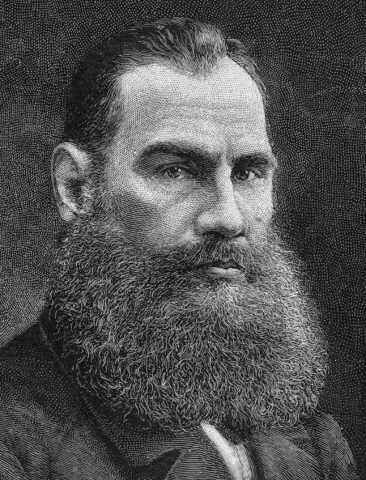
Read: From Sevastopol Sketches for an early example of stream of consciousness by Tolstoy. Also read http://www.meredithsuewillis.com/materials.html#dwight for an example of a character thinking. Also look at free indirect speech, and long-shot & close-up, logistics and an interesting example of flashback.
(Image of Lev Tolstoy)Optional: From Ten Strategies to Write Your Novel, read "Chapter 3: Explore Character from the Inside Out," page 21.
Presentations by class members. (See schedule below)
7. 11-13
STARTING THIS WEEK: INFORMAL CONFERENCES-- MSW will be in lunch-room area on second floor at @ 6:00 to 6:10 PM.
Assignments due: Write: A complete scene from your novel. If you haven't read it yet, read this material on scene.
Read: If you haven't seen it yet, read Grammar for Fiction Writers, and also look at the summary of an article on using present tense in fiction.
In class topics: OutliningPresentations by class members. (See schedule below)
8. 11-20 Assignments due: Write: An outline of your novel. The outline might be chapter titles, scene treatment, flow chart, webbing, etc.
INFORMAL CONFERENCES-- MSW will be in lunch-room area on second floor at @ 6:00 PM. Please email if you want to be sure time is set aside for you.
Optional: Here's an interesting article about fiction writing by Walter Mosley and some quotations by famous writers about writing. Two more good articles: MFA Programs versus the NYC Publishing World from Slate and a New York Times article about a Pulitzer Prize winning novel from a small press that they (the Times) failed to review): Tinkers.
In class topics: Sex scenes; some novel structures.
Presentations by class members. (See schedule below)
(Image of Walter Mosely)
9 . 11-27 Assignments due: Write: A revision of any scene or passage in response to suggestions. Please turn in the original version with notes for comparison. You may also, of course, turn in a substitute selection for feedback.
INFORMAL CONFERENCES-- MSW will be in lunch-room area on second floor at @ 6:00 PM.
In class topics: Short discussion about marketing your novel.
Read MSW's article "Seven Layers to Revising Your Novel."
For marketing discussion, read "The Business of Books, by André Schiffrin" by the instructor. Send questions re: marketing in advance! In class topic: The Writing Life and Publishing.For information, go to the resources page, and in particular to the links in the left hand column for: Agents, Articles of interest to writers, Book Doctors & Private Editors, Book Publishers (small), Copyright , markets for literary fiction, Printers: Recommended book producers (not publishers), Publicizing Your Book , and more online resources for http://www.meredithsuewillis.com/samplequeryletters.html.
Pacing, modulating time. (Also see physical action )
Presentations by class members. (See schedule below)
10. 12/4 Final Session-- Farewells!
If you haven't yet, read MSW's article "Seven Layers to Revising Your Novel" and the material on pacing.
INFORMAL CONFERENCES-- MSW will be in lunch-room area on second floor at @ 6:00 PM.
Presentations by class members.(See schedule below)
All assignments should be PART OF YOUR NOVEL. If you already have a substantial number of pages drafted, you may substitute any short section for regular assignments.
Resources
Some materials on marketing
An article on the difficulty of workshopping novels
A study published in SCIENCE magazine about how literary fiction is good for you! http://well.blogs.nytimes.com/2013/10/03/i-know-how-youre-feeling-i-read-chekhov/?_r=0
A page with tips, hints and questions-and-answers for writers
An article on ending a novel.
Wall Street Journal article about a former student of mine
whose self-published book was picked up by commercial presses.Hero's Journey Story Structure
Resources for Writers
Recommended Novels and Novelists
Literary Agent Blogs Featured Book Deal
Things to Think About More Resources, Articles, & More
Three Good Places to Have Your Grammar Questions Answered:
The Grammarist
Grammar Girl
The Center for Writing Studies
About writing a novel: "You don’t construct the kitchen—foundation to finish—and then move on to the living room—foundation to finish—and then move on to the bedroom—foundation to finish. You build a big thing in stages, which means that the house isn’t really habitable until very close to the end of the process. This is why it’s hard to workshop a big thing in progress. It’s like someone wants to show you the house they’re building. You show up for the grand tour, but the house is nothing but concrete and a frame."
-- Cathy Day20 apps (most free) to help your writing
Coincidence in fiction
Zoe Heller and Leslie Jamison on reading difficult novels
Most common errors fiction writers make. Do you agree?
Amusing piece from Buzz Feed in which some guy in a writing workshop critiques Jane Austen.
John Berryman's advice to W.S. Merwin at the end of a Merwin poem called "Berryman"
I asked how can you ever be sure
that what you write is really
any good at all and he said you can't
you can't you can never be sure
you die without knowing
whether anything you wrote was any good
if you have to be sure don't writeSamples of mass action writing: strikes, demonstrations: from Sister Carrie; Shelley Ettinger's sample from the upcoming Vera's Will; from MSW's novel Trespassers. Note that the Strike passage from Sister Carrie is told from the point of view of the strikebreakers, the scabs
More information: Chuck Sambuchino's blog about agents (on Writers Digest) at http://www.writersdigest.com/editor-blogs/guide-to-literary-agents and then the web site for submissions that Galal mentioned: https://duotrope.com/
Article on the importance of precise prose by MSW.
Five Tools for Building Conflict in a Novel
Check this out: a writer chooses self-publishing over a Big Five Deal.
Current Week of Syllabus
Presenters List (will be set up later)
Resources
MSW Home
Informal Conferences-- 6:00 in the cafeteria area
11-13
Jamie Ma
11-20
Natalie 6:00
11-27
Laura
12-4
Susannah 6:00
Presenters
10-23-17
Suzanne Martinez
10-30
Amelia Pichoux
Taylor Harris
Nathalie Reichel
11- 6
Charlotte Rudge
Alison Hubbard
Jamie Ma
11-13
Laura Moss
Susannah Nolan
Erin RIchards
11-20
Carly Shapiro
Allison Hubbard
Suzanne Martinez
Natalie Reichel
11-27
Jamie Ma
Laura Moss
Amelia Pichoux
Erin Richards
12-4
Tim Culetta
Taylor Harris
Margaret Jones
Ilana Mollick
Susannah Nolan
Some Things to Think About
Lewis Hyde writes about art and the market economy: ".....there are categories of human enterprise that are not well organized or supported by market forces. Family life, religious life, public service, pure science, and of course much artistic practice: none of these operates very well when framed simply in terms of exchange value. The second assumption follows: any community that values these things will find nonmarket ways to organize them. It will develop gift-exchange institutions dedicated to their support.
– Lewis Hyde, “On Being Good Ancestors,” The Gift (New York: Vintage, 1979-2007) pp 379-379.
Grace Paley once said in an interview, "I'm an ear believer--I think the ear is smarter than the eye. The experience of reading your work aloud in a class carries you back to that original impulse, 'I want to tell you something.' 'What did you want to tell me? Tell me.' When you tell a story, it's your voice telling a story. You really can hear what's wrong with it. People think you can just sort of smear over it, but that's not true. What I'm trying to do is to remind students they have two ears. One is the ear that listens to their own ordinary life, their family and the street they live on, and the other is the tradition of English literature."
Michael Chabon believes that three things are required for success as a novelist: talent, luck, and discipline. He says, “Discipline is the one element of those three things that you can control, and so that is the one that you have to focus on controlling, and you just have to hope and trust in the other two.”
For me there is no such thing as fiction without poetry and politics. If you excise either one, you have taken the heart of us all. You won't get rich following my advice, but you may come up with something close to true..
Titles are important; I have them before I have books that belong to them. I have last chapters in my mind before I see first chapters, too. I usually begin with endings, with a sense of aftermath, of dust settling, of epilogue. I love plot, and how can you plot a novel if you don't know the ending first? How do you know how to introduce a character if you don't know how he ends up? You might say I back into a novel. All the important discoveries—at the end of a book—those are the things I have to know before I know where to begin.
-- John Irving
You can be pretty polemical in a novel. What you have to be careful of is appearing, as author, to intrude upon your narrative. When readers sense a writer pulling strings, then they start thinking of the characters as puppets, not really people. I never want to pull readers out of the dream.
More resources:
Resources for writers: Resources.
Books about writing: Bibliography.
Some quotations about writing.
Typical novel lengths: click here.
Article about fiction writing by Walter Mosley.
A few novels recommended for reading/study by students
Notes on Point of View
Proof reader's marks
Marketing notes
A Selection of Articles and other materials:
Article on MFA world versus NYC publishing world.
Blog entry by Tayari Jones on the importance of Names.
MSW's article "Apply Film Techniques to Fiction Writing" is in the April 2010 print issue of The Writer magazine. A sample from the article is free online here. You may have to register for the site, but there is no charge.
"The Business of Books, by André Schiffrin" (review by Meredith Sue Willis of a book on the status of publishing)
A literary agent's advice: Should You Hire a Book Doctor?
From The Guardian online: Elmore Leonard’s funny rules of writing, plus those of Margaret Atwood and others:
http://www.guardian.co.uk/books/2010/feb/20/ten-rules-for-writing-fiction-part-oneSome model novels (and a few memoirs) recommended by members of Advanced Novel Workshop
Some Literary Agents' Blogs (thanks to Jessica Word)
"Pub Rants" (http://pubrants.blogspot.com/)
Nathan Bransford (http://blog.nathanbransford.com/)
Janet Reid (http://jetreidliterary.blogspot.com/)
Jessica Faust (http://bookendslitagency.blogspot.com/)
Some Recommended Novels from Fall 2017 Class
Ocean Sea Alessandro Baricco
The Poisoner's Handbook Deborah Blum
Crimson Petal and the White Faber
Before the Fall Noah Hawley
Remains of the Day Kazuo Ishiguro
A Separation Katie Kitamura
The Unbearable Lightness of Being Milan Kundera
Crazy Rich Asians Kevin Kwan
Defending Jacob William Landay
Throne of Glass Sarah J. Maas
H is for Hawk Helen Macdonald
Let the Great World Spin Collum McCann
This Side of Brightness "
Who Will Run the Frog Hospital Lorrie Moore
The Moment of Letting Go J.A. Redmerski
Liar and Spy Rebecca Stead
Anna Karenina Tolstoy
Some Recommended Novels and Novelists from Other Classes
Jane Austen Pride and Prejudice
Muriel Bertenz The Elegance of the Hedgehod
Charles Bukowski Pulp
Orson Scott Card Worthing Saga
Paolo Coehlo Eleven Minutes
The Witch from Portobello
Daniel Defoe Robinson Crusoe
Junot Diaz The Brief and Wondrous Life of Oscar Wao
Ken Follett The Pillars of the Earth
World Without End
Ernest Hemingway The Sun Also Rises
Khalid Hoseini The Kite Runner
Siri Hustvedt What I Loved
Doris Lessing The Golden Notebook
C.S. Lewis Voyage of the Dawn Treader
Haruki Murakama The Wind Up Bird Chronicle
James Patterson Along Came a Spider
Thomas Pynchon Inherent Vice
Tom Robbins Still Life With Woodpecker
Philip Roth Portnoy's Complaint
Sapphire Push
Budd Schulberg Swan Watch
Seth Graham-Smith Pride and Prejudice Zombies
Elizabeth Strout Olive Kitteridge
Abigail Thomas Safekeeping
Tolstoy War and Peace
Anna Karenina
Edith Wharton The House of Mirth
Meredith Sue Willis Oradell at Sea
Tom Wolfe I Am Charlotte Simmons
Man in Full
Carlos Ruiz Zafron Shadow of the Wind
Richard Yates Revolutionary Road
Zafron The Angels Game
Shadow of the Wind
Recommended authors included: Orson Scott Card; Barbara Kingsolver; Hemingway; Richard Morgan; Alice Munro; Robert Gay
Also, take a look at National Novel Writing Month!
Official NYU syllabus with policies etc.
Novel Writing I: Beginning Novel Writing Fall 2016 NYU WRIT1-CE9355 New York University, School of Professional Studies, Center for Applied Liberal Arts 838 Broadway, 6th floor New York, NY 10003
Monday 6:30 PM - 8:50 PM 9/26/16 - 12/12/16
Location: Manhattan Village Academy, Room 219
Instructor: Meredith Sue Willis Email: MeredithSueWillis@gmail.com Meredith Sue Willis home page is http://www.meredithsuewillis.com Class webpage is http://www.meredithsuewillis.com/nyunovelone.html
Course Description: Course Description: Receive help getting started and getting structured, whether your goal is writing a novel or molding a series of short stories into a longer piece of fiction. Writing exercises include establishing tone, exploring character, making dialogue tighter and deeper, and using interior monologue. Topics include sustaining interest as a writer and a reader, understanding the value of an agent, and excerpting from a lengthy work for publication in magazines.
Course Prerequisites: This course is appropriate for you if you have done some writing or have taken an introductory writing course.
Course Structure/Method:
This course is in person and meets weekly. Attendance is expected, as students support and critique one another's work. There will be weekly assignments and occasional presentations to the class.
Course Learning Outcomes: By the end of this workshop course, students will, if they do all assignments in class and out, have up to thirty pages drafted of a new novel. Students will also have a first go at a plan for a novel, and they will have improved their ability to critique their own work and the work of others.. .
Communication Policy: Communication is by email, and the professor will attempt to answer email inquiries within forty eight hours.
Course Expectations: Students are expected to look at the class webpage at least weekly for changes, updates, and links to readings. These will be found at http://www.meredithsuewillis.com/nyunovelone.html Homework assignments should be in hard copy, double-spaced with one inch margins on all sides and a font similar to Times New Roman 12 point, @ 2 pages long (up to 600 words). The homework assignments are for the professor only. She will respond holistically. You will also be expected to present your work to the whole class at least one. You are expected to attend all classes, as the course is planned around class discussion. Most sessions will include in-class writing.
Required and Recommended Material: The text for this course is the work of the other students plus occasional readings available by link from http://www.meredithsuewillis.com/nyunovelone.html or in hard copy handouts.
Assessment Strategy: This is a non graded class. Assessment is by the teacher's holistic responses to student work as well as by class response to work presented for critique to the class.
"NYUSPS policies regarding the Family Educational Rights and Privacy Act (FERPA), Academic Integrity and Plagiarism, Students with Disabilities Statement, and Standards of Classroom Behavior among others can be found on the NYU Classes Academic Policies tab for all course sites as well as on the University and NYUSPS websites. Every student is responsible for reading, understanding, and complying with all of these policies."
The full list of policies can be found at the web links below: · University: http://www.nyu.edu/about/policies-guidelines- compliance.html · compliance.html · NYUSPS: http://sps.nyu.edu/academics/academic-policies-and- procedures.html
School Grading Policies:
NYUSPS Career Advancement (non-degree) http://sps.nyu.edu/content/scps/academics/noncredit-offerings/academic-noncredit- policies-and-procedures.html
NYUSPS Diploma (non-degree) http://sps.nyu.edu/academics/academic-policies-and-procedures/diploma-academic- policies-and-procedures.html#Good_Academic_Standing
Course Outline:
Session 1. 9-25-17 Introduction. In class topics: Process and product; story, plot, and architectonics. What fiction does that movies can't. Fiction as the art of doing many things at once. Centrality of the concrete in fiction.
Session 2. 10-2 Assignments due: Write: The first time a character visits a place in your novel– describe the place using all five senses if possible. Read: Selections of place descriptions linked online. In class topics: Importance of concrete sense description. Approaches to critiquing. Be prepared to talk briefly about one favorite novel of yours-- what you admire, enjoy, about it.
No Class October 9, 2017
Session 3. 10-16 Assignments due: Write: The first appearance of a character who is not the main character. Emphasize physical description using concrete details based in the senses, as you did with the place. Feel free to include dialogue, action–whatever you'd like. In addition, please provide a short interior monologue or spoken speech by the character revealing some of his or her inner life. Read: Character descriptions online , including Anthony Trollope's wonderfully sleazy Mr. Slope from Barchester Towers and other characters--all described from the outside, focusing on sense details. Also read the characteristics list . In class topic: Centrality of Point-of-View . Also, If you haven't yet, take a look at proof reader's marks , and at the standard formatting for fiction.
Session 4.10-23 Assignment due: Write: Another appearance of the same character as in the previous assignment but from the middle of your novel. Have this scene reveal more about the character through dialogue and action. Read: Examples of scene versus summary (showing versus telling) ; the material on dialogue tags, logistics; material on scene; and a sample demonstrating how to punctuate thoughts in third person writing. Optional: Read the instructor's article on dialogue "Dialogue: The Spine of Fiction". Also, take a look at this Writers' Digest article on dialect in dialogue. In class topics: Centrality of Point-of-View continued. Also, If you haven't yet, take a look at proof reader's marks , and at the standard formatting for fiction. Physical Action as part of Description. Presentations by class members. (See schedule on website). During the rest of the course, class members will present passages from their novels for critique. Please bring enough copies of up to ten pages for each member of the class and the teacher one week before your presentation. Sign notes you write to the other students. Consider using proofreaders' marks.
Session 5: 10-30. Assignments due: Write: a passage with dialogue and conflict. Conflict can, of course, be overt, subtle, interior, etc. Read: Review of "The Business of Books, by André Schiffrin" by the instructor. This article is about a book published nearly fifteen years ago that predicted a lot of what would happen to commercial publishing. What it didn't predict was the burgeoning of online writing and self-publishing. Optional-- Read a short story , "The Two Lindas," by MSW that, after the set up, is almost all dialogue--and conflict.In class topic: Centrality of Dialogue to Novels Presentations by class members. Session
6.11-6 Assignments due: Write: a passage inside a character's head while the action is underway. This can be internal monologue, stream of consciousness, internal third person (also called "the reflector"), or other. The character may also be simply thinking, or the thoughts may be happening while the character is in motion. Read: From Sevastopol Sketches for an early example of stream of consciousness by Tolstoy. Also read http://www.meredithsuewillis.com/materials.html#dwight for an example of a character thinking. Also look at free indirect speech, and long-shot & close-up, logistics and an interesting example of flashback. Presentations by class members.
Session 7. 11-13 Assignments due: Write: A complete scene from your novel. If you haven't read it yet, read this material on scene. Read: Grammar for Fiction Writers. Also look at the summary of an article on using present tense in fiction . In class topic: In class topics: Outlining & Marketing and Business of Fiction. Presentations by class members. (See schedule below)
Session 8. 11-20 Assignments due: Write: An outline of your novel. The outline might be chapter titles, scene treatment, flow chart, webbing, etc . In class topic: Pacing, modulating time. The Hero's Journey and other novel structures. Presentations by class members.
Session 9 . 11-27 Assignments due: Write: A revision of any scene or passage in response to suggestions. Please turn in the original version with notes for comparison. You may also, of course, turn in a substitute selection for feedback. In class topics: Pacing continued. Logistics (see physical action ). Optional: Here's an interesting article about fiction writing by Walter Mosley and some quotations by famous writers about writing. Two more good articles: MFA Programs versus the NYC Publishing World from Slate and a New York Times article about a Pulitzer Prize winning novel from a small press that they (the Times) failed to review): Tinkers. Presentations by class members.
Session 10. 12-4 Final Session-- Farewells! Presentations by class members.
Send mail